What Do Sea Turtles Actually Eat? The Seagrass Meadows That Set Their Table
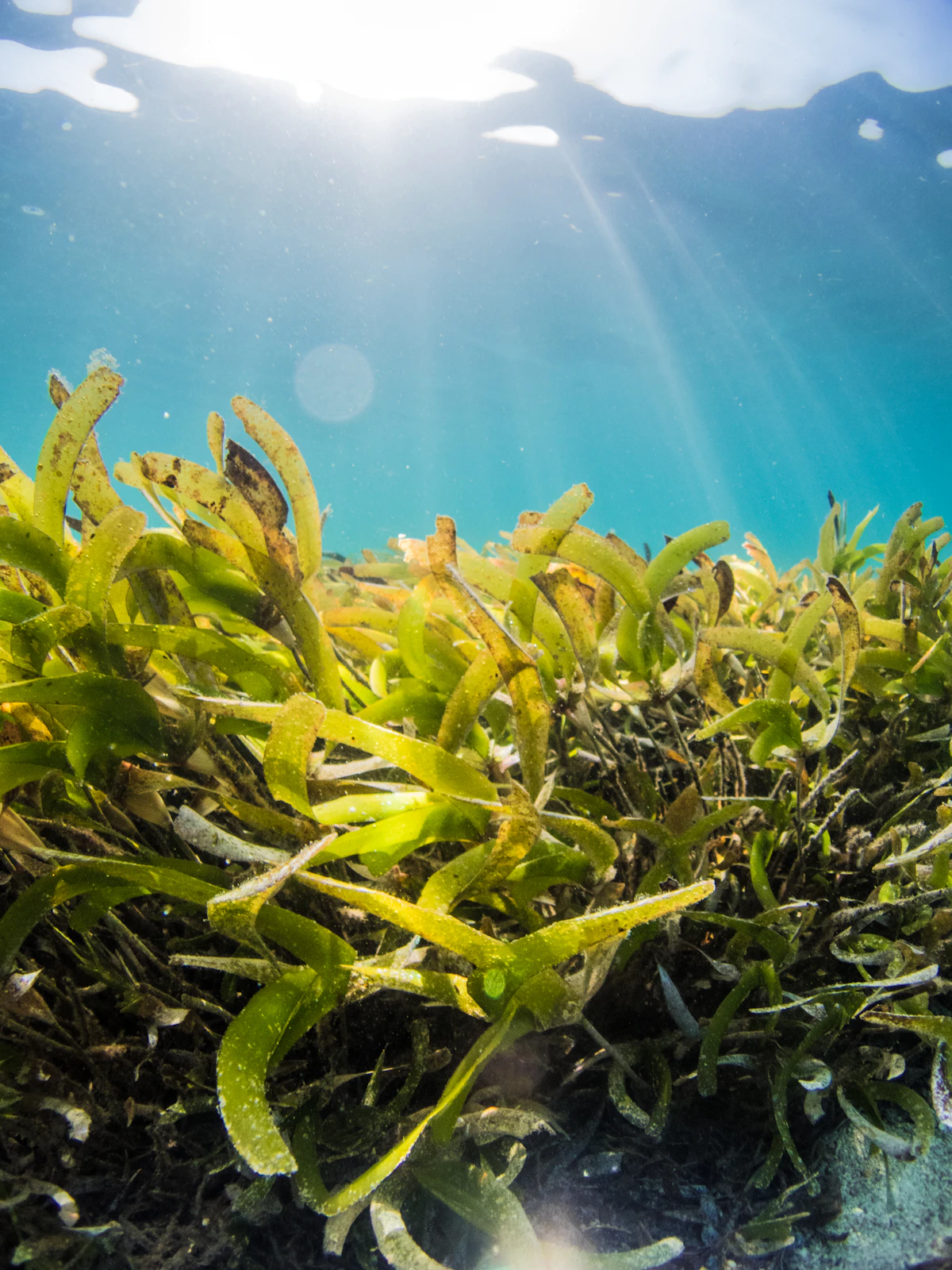
If you want to meet a sea turtle, the shortcut is knowing where it eats. The seagrass meadows of Okinawa are the dinner table of the green sea turtle. Here is why they keep returning to the same patches — and why we watch from a distance.
Seagrass and seaweed are not the same thing
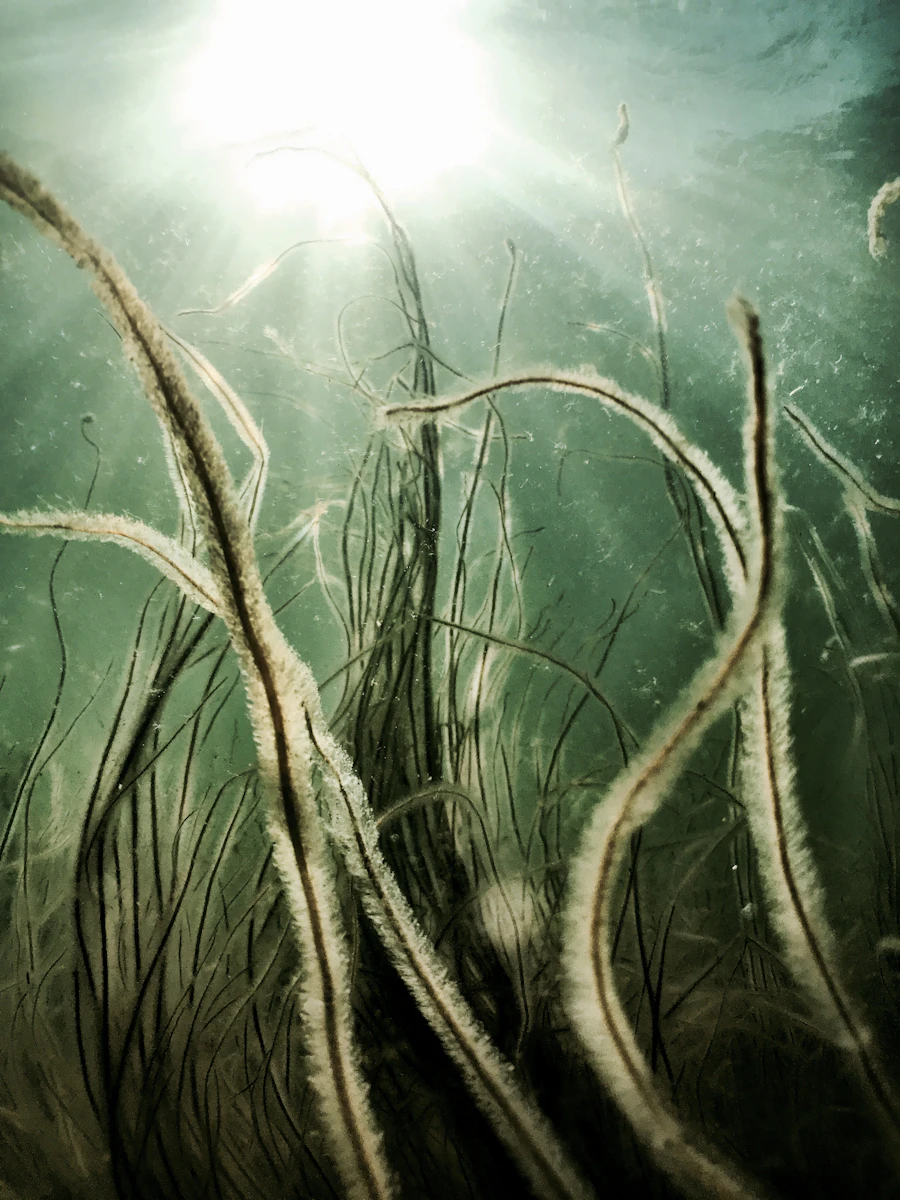
They sound alike, but seagrass and seaweed are different things. Seaweeds such as wakame and mozuku are algae with no roots. Seagrass is a flowering plant like the ones on land — roots, stems, leaves and all — anchored in sand and even blooming underwater. On Okinawa’s shallow sand flats, species like Thalassia and Enhalus form dense stands, creating the underwater grasslands we call meadows. Picture a lawn of green swaying quietly below the surface.
Adult green turtles turn vegetarian
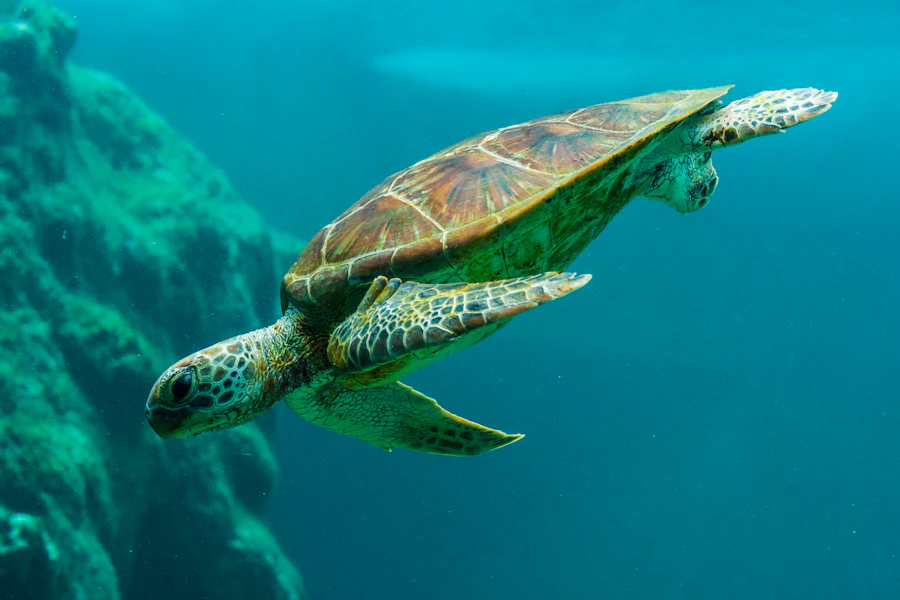
This surprises people: green sea turtles are omnivores as juveniles and shift to a plant diet as they grow. Adults live mainly on seagrass and algae, so the meadows become their canteen. They also return to the same patches over and over, grazing them so regularly that you can see the crop marks. That is why knowing the meadows matters more than anything else for finding a turtle. Rather than searching the open sea at random, you wait quietly beside the table. That is the guide’s job.
Do not touch, do not chase, do not block the way up
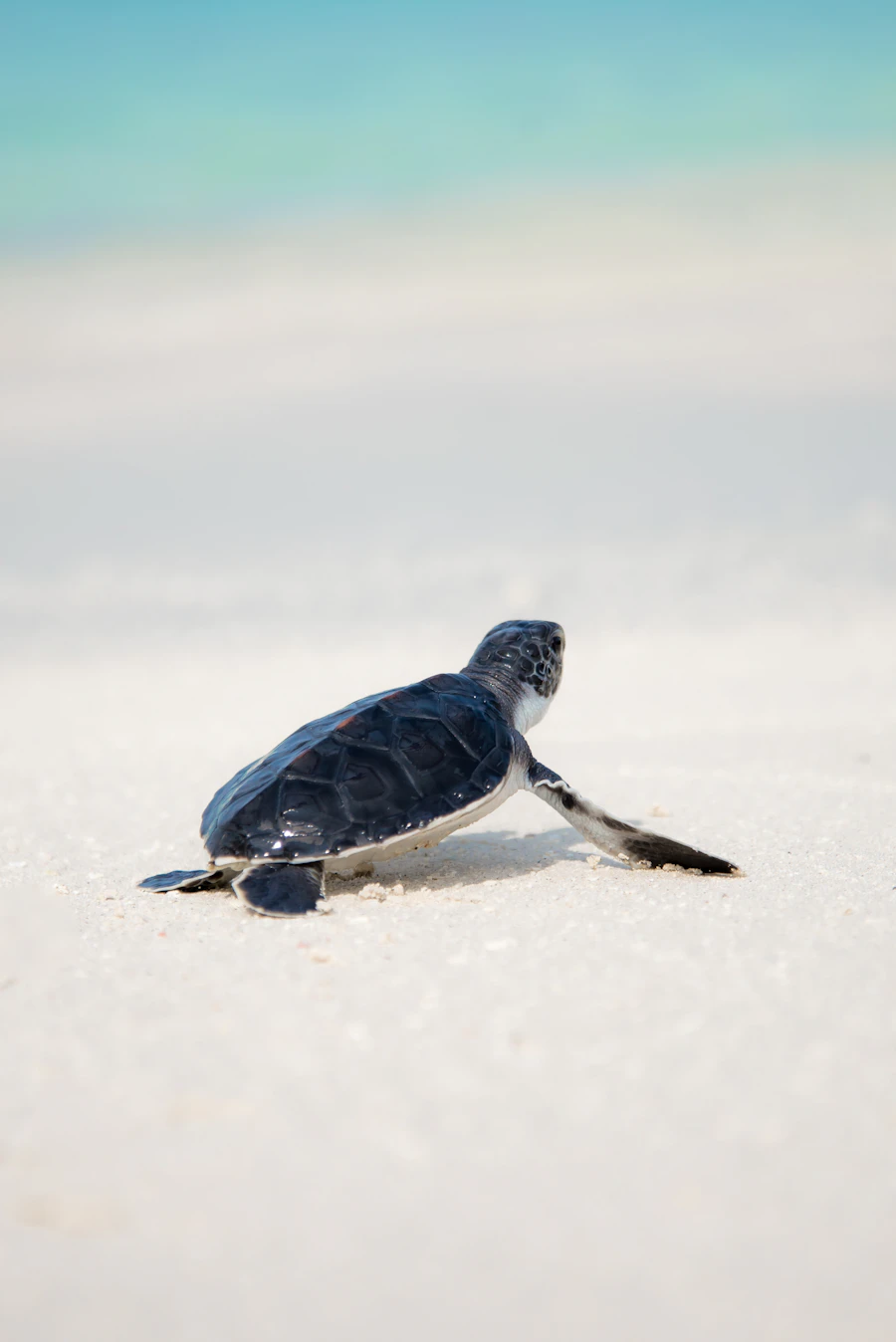
A sea turtle surfaces to breathe every few minutes. Get in the way of that and you are interfering with its breathing. We keep three rules without exception: do not touch, do not chase, and never sit in the path it takes to the surface. Swim quietly alongside instead and it will carry on grazing, which is exactly how you end up spending longer with it. Okinawa also prohibits the taking of sea turtles under a fisheries commission instruction, so catching one is not an option. The distance that leaves an animal in peace is also the distance that gives you its most natural face.